WaMu Gave Grandma's Money to Crooks
special announcements
New York Times Reporting on ICT
The article appeared on May 21, 2007.
click here for more info
the short version
a huge security flaw in WaMu checking accounts?
for casual browsers or the short-attention-span crowd
problem
My grandmother was defrauded of nearly $700 by a phone scam. The real scumbags are the "merchants" who scammed grandma and the individuals who work with them. The underlying problem, however, is Washington Mutual's practice of accepting -- unverified -- phone-authorized checks printed up by the merchants themselves in victims', like my grandmother's, name. My grandmother never signed (or even saw) the check they cashed!
goal
I am pressing Washington Mutual (WaMu) to reimburse my grandmother because of their irresponsibility in processing the scammers' check and their laziness in investigating her fraud claim. By doing this, I hope to persuade WaMu and other banks to crack down on criminal scammers, unscrupulous merchants, and insecure business practices. Stop such practices and you'll strangle this breed of scammer. Sure I'd like to get grandma's $700 back, but that doesn't seem likely and it would be reward enough for her if it helped put this scum out of business.
background
My grandma is 80 years-old, well-read, still attends extension classes at her local university, and is nobody's fool. She is not poor but lives in subsidized housing on a fixed income. Her one failing: she was too polite to hang up on a phone solicitor and too trusting to recognize a scam in the making. I am her grandson, a web designer and writer based in Southern California. (And a Washington Mutual account holder myself.)
for the long version, click here

That's what you get when you help rip off grandmas. Well, that, and give a home loan to every lying schmuck who walks through the door.
Labels: wamu
Bilking the Elderly, With a Corporate Assist
I'd say that I was happy to see it, but it is anything but happy reading. A great article and I was interested to see that it is the number 2 most popular article on the Times' site today.
The case of Richard Guthrie is just the kind of case I imagined when my grandmother was scammed. I'm very sorry to hear what happened to him and what I can imagine are thousands and thousands like him. I can only express relief that my grandmother didn't end up this far in.
I noticed that the article also reinforces a central thesis of this blog -- American banks and their damned unsigned checks are a big part of the problem:
“Such drafts should be eliminated in favor of electronic funds transfers that can serve the same payment function” but are less susceptible to manipulation, they wrote.
But the Federal Reserve disagreed. It changed its rules to place greater responsibility on banks that first accept unsigned checks, but has permitted their continued use.
More details in the article:
Between 2003 and 2005, scam artists submitted at least seven unsigned checks to Wachovia that withdrew funds from Mr. Guthrie’s account, according to banking records. Wachovia accepted those checks and forwarded them to Mr. Guthrie’s bank in Iowa, which in turn sent back $1,603 for distribution to the checks’ creators that submitted them.
Within days, however, Mr. Guthrie’s bank, a branch of Wells Fargo, became concerned and told Wachovia that the checks had not been authorized. At Wells Fargo’s request, Wachovia returned the funds. But it failed to investigate whether Wachovia’s accounts were being used by criminals, according to prosecutors who studied the transactions.
In all, Wachovia accepted $142 million of unsigned checks from companies that made unauthorized withdrawals from thousands of accounts, federal prosecutors say. Wachovia collected millions of dollars in fees from those companies, even as it failed to act on warnings, according to records.
First time I've heard this mentioned. Rekindles my rage with Washington Mutual, Faye Chapman, Andrew Samuels, and all the banking industry's lackeys. Put the Federal Reserve now at the top of that list.
Still can't figure out why in the hell this antiquated and grossly insecure method of payment is allowed to continue. Other than an ingrained reverence for the status quo.
Labels: wamu
As far as my grandma's case:
The bad news is : she never recovered her money and as far as I know. No one was ever brought to justice. Wamu never got back to me. And the banking industry has not changed their practices, meaning some unknown number of people are still getting ripped off by these creeps.
The good news : Grandma hasn't been ripped off since this happened. And I've moved most my money out of my Wamu account into a credit union. (And the New York Times may now be looking into this.)
Labels: wamu
Last week, I phoned his office. His secretary, however, informed me that he was on the phone with another customer. She asked for my phone number, but I really didn't want him calling me back on my cell phone while I'm grocery shopping or something, so I asked his email address. She gave it to me. I won't post it here, because that would seem malicious. But if you would like to email Mr. Samuel, please feel free to email me.
Here is the email I sent him. It has been over a week and I have not received a response.
I recently wrote Faye Chapman regarding an incident of fraud against my grandma's Washington Mutual checking account (Forgery Case #200602xxxxx.) You were kind enough to write my grandma in answer to my letter and invite her to contact you with any further questions. My grandma shared the letter with me and I tried to phone you today with some further questions we have. However, you were unavailable and, at my request, I was provided your email address. I'm writing on behalf of my grandma with some follow-up questions.
You note in the letter that you can only communicate regarding particulars of her account with her individually. None of my questions involve private details related to her account, so I hope you will find no obstacle to responding to these questions.
1. Washington Mutual paid funds out of my grandmother's checking account because a fraudulent telemarketing company ("the merchant") printed up a check with her account information on it. She never signed or saw the check. Although you state in your letter that she authorized the transaction, she did not authorize it according to the terms presented to her by the merchant in portions of the transaction not recorded, which disguised the fact that a demand draft would be drawn up and money taken from her account.
The company itself, I have learned, is being investigated by the state of Wisconsin and Canadian authorities. In my letter, I asked why Wamu would ever cash such a check? You wrote, "Washington Mutual Bank honored the items because they are negotiable instruments according to the Uniform Commercial Code 3104."
My question: is Wamu legally obligated to honor such items? In cases where the authorization is questionable and the instrument originates from a company with a public record of questionable practices, can a bank refuse to honor such an instrument?
2. I contacted Bank of America and asked one of their agents if they cash these kind of checks. He said that they do, but with certain known discreditable merchants, they immediately credit back the customer's account without any request even being necessary from the account holder. Another person whose mother-in-law was victimized in a scheme similar to the one that target my grandmother informed me that Wachovia, where his mother-in-law's account is held, immediately refunded the $498 taken from her account when they brought it to their attention.
In your letter, you write, "The Forgery Department is very familiar with the different telemarketing companies, and knows which ones provide a recording of the verbal authorization." Cursory research on my part revealed that the merchant in question in my grandma's case has a public history of senior fraud. See, for instance:
http://www.msnbc.msn.com/id/4534338/
Given these facts, why wouldn't Washington Mutual question the validity of the authorization or follow a policy like Bank of America or Wachovia to protect your account holders?
3. You note in your letter that my grandma should be receiving two refunds for checks cashed against her account. She has not seen either of these refunds and when I have talked with the customer support company, Client Care Relations, I get a different answer every time.
Can you give me the name and phone number of the contact with whom you spoke at Client Care Relations so that I can obtain definitive information on the status of her refunds? My suspicion is that the puported refunds are merely a diversion to get my grandma and Washington Mutual to go away.
4. In your letter, you state that my grandmother authorized one of the fraudulent merchants to write a check against her account by answering "yes" when she was asked "is Orange City, CA where the account is held?" Is getting an account holder to verbally confirm the location of their local Wamu branch sufficient authorization for anyone to write a check against your customer's account?
5. On the advice of someone with whom I discussed this matter, my grandmother and I would like if possible to initiate an R-10 chargeback against each of the unauthorized demand drafts presented against my grandma's account. Can we do this? If so, how can we do so?
6. If a chargeback is not possible, I'd like to again request Washington Mutual reimburse my grandmother for the unauthorized demand drafts cashed against her account. In making this request, I acknowledge the reason why Washington Mutual refused her initial fraud claim. In making this second appeal, I ask you to reimburse her not because the payment Washington Mutual was unauthorized but as an act of good faith and positive customer relations consistent with the practices of Bank of America and Wachovia and, I hope, Washington Mutual itself.
Thank you again for your time and attention.
Sincerely,
wamuonfraud
Labels: wamu
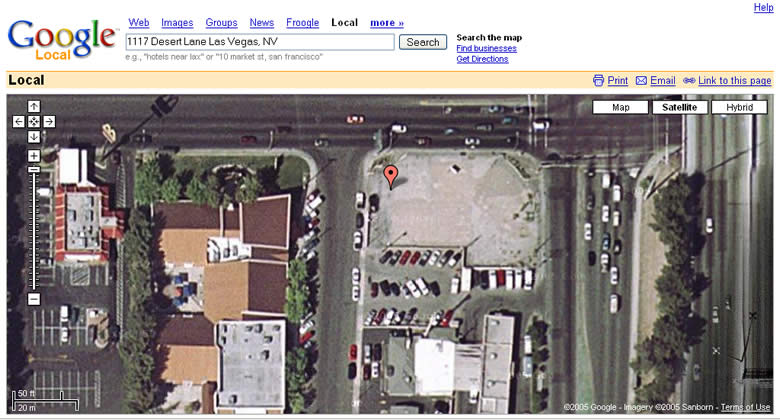
Here's my first map:
Map of the International Conspiracy to Defaud My Grandma
Added 4 places so far. Kinda fun.
Labels: wamu
A summary of the contents:
1. Washington Mutual accepts no responsibility for the protection of its customer's account.
2. The two phone-authorized checks we cashed against your account were valid "negotiable instruments" according to what is defined as a "demand draft" in Uniform Commercial Code 3104. Under this code, any check presented by a third party under your "purported authority" will be cashed.
3. A demand draft can be authorized by nothing more than one of our customers stating yes and confirming the city in which their account is held.
4. Washington Mutual's Forgery Department's responsibility is to place as much liability as possible on our customers. The Forgery Department is "very familiar" with telemarketing companies such as the one that defrauded you, yet Washington Mutual still unquestionly processes checks from them.
5. Washington Mutual is no different than other financial institution in accepting checks of this nature.
I give Washington Mutual and Mr. Samuel credit on two counts:
1. He wrote out a personally signed letter within 2 weeks of receiving my letter.
2. He answered each of the questions I raised.
I'm not satisfied by the response. In fact, I'm even more outraged by the grounds upon which Washington Mutual defends their acceptance of these checks. And his letter raises as many questions as it answers.
Mr. Samuel provides a phone number: 1-800-225-5497, option 2. I am going to write down my questions and contact him sometime in the coming week.

Labels: wamu
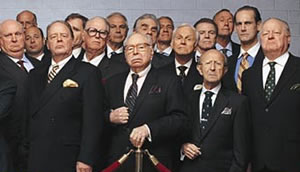
Here's the Adweek summary:
* In television spots breaking today, the agency introduces the idea of the "banker's pen," where a pool of rich bankers is kept in the basement of a Washington Mutual branch.
* The new spots introduce a free checking product, which offers free ATM cash withdrawals, a free overdraft waiver, free checks for life and cash back for debit card use.
My question for Washington Mutual: was it one of those old bankers in the basement that told you not to accept checks like this?
If so, maybe you should hear out a few of their ideas. (One conclusion a cynic might draw from all of this: Washington Mutual doesn't mind sacrificing a few senior citizens if it serves the higher purpose of their own public image.)
A more detailed description of the new Wamu ad campaign can be found here:
Washington Mutual Launches National Advertising Campaign in Support of Its New WaMu Free Checking(TM) Account, Stirs Up the Industry
I suspect it has less to do with stirring up the industry than covering their ass(ets).
Labels: wamu
Compromised Wamu Debit Cards?
this story appeared on msnbc.com:
Debit card thieves get around PIN obstacle
From the article:
I explain in my post the way by which Wamu informed their customers of the breach (they didn't).
The whole article is worth reading, especially if you use a debit (as opposed to credit) card.
Labels: wamu
This might be considered the Long Version of what happened:
Senior Executive Vice President and General Counsel
Washington Mutual, Inc.
1201 Third Avenue, WMT 1501
Seattle, WA 98101
Forgery Department
Washington Mutual, Inc.
PO Box 201079, STA2FOR
Stockton, CA 95290
Re: My Grandmother, Case #200602xxxxx
Dear Ms. Chapman,
I'd like to share with you details of a fraud against my grandmother's Washington Mutual checking account. It resulted in her losing nearly $700 (about half her account balance) and led her to close her account and discontinue her business with Washington Mutual. I have spoken with representatives of Washington Mutual (WM) on your customer support phone line. I received incomplete and unsatisfactory answers to questions I raised about this incident. I was instructed to write this letter.
I am writing this letter as:
1. a concerned grandson
2. a Washington Mutual personal checking account holder myself
3. someone who would really like to see the type of people who victimized my grandmother and evidently make a career doing this put out of business
My grandmother is a responsible, independent, well-read 80 year-old widow. She still attends extension classes at her local university and is not a fool. She is not poor but lives in subsidized housing on fixed income. Her one failing: she was too polite to hang up on a phone solicitor and too trusting to recognize a scam in the making. After vainly filing a fraud claim with your Forgery Department, she closed her account and wisely decided to put this behind her as much as possible. It gives her a headache and, happily, she has better things to do with her time. Believe when I say I do as well. But she has given me her blessing in pursuing this matter and I have taken it up as a matter of civic responsibility if nothing else.
I have addressed this to you because I expect it will hold some special interest for you as an executive and general counsel for Washington Mutual or at least for someone who reports directly to you. I have also addressed it to Washington Mutual’s Forgery Department as advised, though I don’t have much confidence in the attention or helpfulness of this department for reasons explained below.
This is what happened, as best I can gather based on phone calls to representatives of the scammers, communications with Washington Mutual customer support, and conversations with my grandmother:
1. In December, she was phoned multiple times by men who possessed her account number and offered to credit her account in return for her cooperation in some kind of vague financial transaction. She admitted that it sounded “hokey,” but did not recognize it as a scam to defraud her account. She never wrote a check to them, never agreed to purchase anything, and never authorized them to withdraw funds from her account.
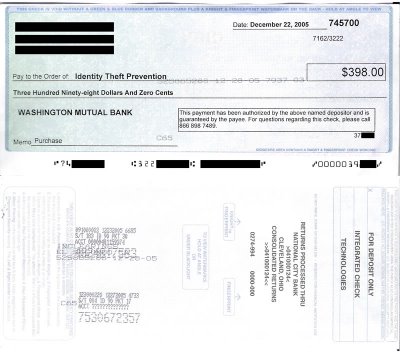
2. On December 22, Identity Theft Protection (ITP) printed a check in her name for the amount of $398. Though it was printed with her name, her (incomplete) street address, her account information, and Washington Mutual's name, it was not a check from her checkbook, she did not sign it, and it was cashed in Cleveland, OH, on the other side of the country. On December 28, WM processed the check and transferred the funds from her account.
3. The fraudulent transaction came to her attention at the end of January when she received her next statement from WM. She did not recognize the transaction and immediately phoned WM to report the unauthorized withdrawal. Around the same time, she received a package from a company named Identity Theft Protection in Las Vegas, NV. It contained generic brochures on identity theft and some miscellaneous junk mail. Apparently, this was the service or product the "merchants" presumed to offer my grandmother in return for her $398.
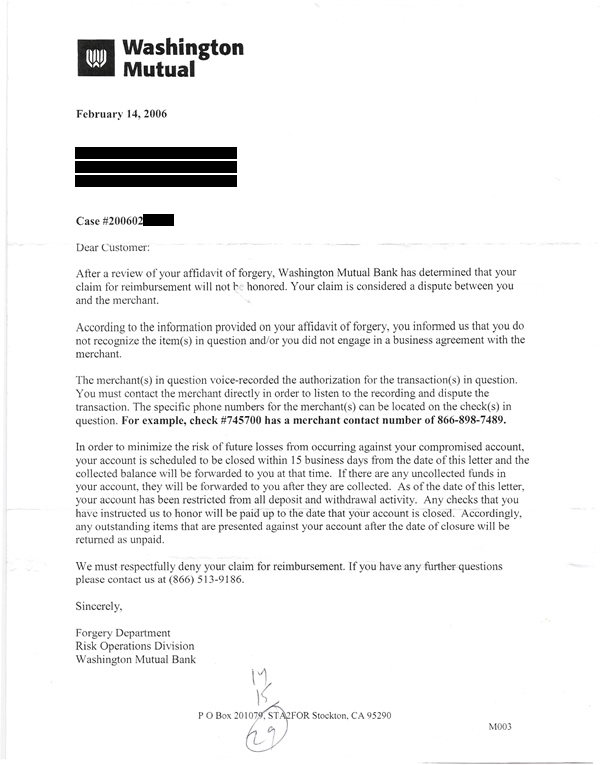
4. On February 14, the WM forgery department sent her an unsigned form letter stating that because the “merchant(s) in question voice-recorded the authorization for the transaction(s) in question,” her claim for reimbursement had been rejected. The letter went on to state, “In order to minimize the risk of future losses from against your compromised account, your account is scheduled to be closed with 15 business days from the date of this letter.” Because her social security checks must be directly deposited to an active account, she closed her account and opened a new one at a different bank with the assistance of her son and daughter (my mom) the following week.
5. Meanwhile, on February 7, after my grandmother had first reported the unauthorized withdrawal, WM honored another check for $299. Although the check was made out to a different company, the check otherwise looked identical to the first.
6. In recent days, I have contacted on several occasions a phone number listed on the first check. The number belongs to Client Care Relations, a Canadian firm that, according to agents with the company I have spoken to, represents over 60 firms. They would not give me any information on the company Identity Theft Protection that forged the check in my grandmother's name, but instructed me to send back the materials my grandmother had received by certified mail then call them back a week later with the receipt number and they would begin processing a refund with ITP. I am in the process of doing this. In phoning them, I also requested to hear the recorded authorization for the transaction. It was played for me and I maintain serious doubts about its authenticity. Client Care Relations claimed to have no knowledge of the second check and attempts to contact the number listed on the check end up in an anonymous voicemail box that is full and accepting no new messages.
7. Last week, I phoned Washington Mutual with my grandmother on the line to follow up on this matter. Before calling, I had drawn up a summary of events (like this one but much briefer) and questions regarding WM's policies and practice in handling my grandmother's account during these events. I spoke to two people who were unable to provide specific answers to my questions before being transferred to Jose Portilla who identified himself as a manager in the Forgery Department. He reiterated that my grandmother's forgery claim had been reviewed, rejected, and closed, and recommended I write this letter.
Listed below are the questions I wrote out before calling WM customer support and a summary of the responses I received:
1. These checks were not signed by my grandmother, did not originate from her checkbook or Washington Mutual, and were unlike any checks that have ever been written against her account before. Why did Washington Mutual honor them? What legitimate purpose could they possibly serve?
I never received a sensible answer to this question. I was informed that WM processed a number of these kinds of checks and they were processed automatically. The automatic acceptance of these checks seems to present a massive security risk for WM checking account holders.
2. What is the maximum amount for which Washington Mutual will automatically process with no additional security precautions?
I was told that there is no limit, only the funds available within the account. This surprised me.
3. How did Washington Mutual conduct their fraud investigation? What company did they contact? To whom did they speak?
The WM representative I spoke to could provide no details of how the investigation was conducted. The letter my grandmother received from WM's Forgery Department indicated only that the merchant possessed a voice recording authorizing the withdrawal and reprinted the phone number listed on the check.
4. The letter from WM's Fraud Department referred to a voice-recorded authorization. I have heard this recording. It sounded as though it had been both recorded out of context and doctored. How did WM's Fraud Department verify the authenticity of the recording?
WM reps could not answer this question and refused to allow me to speak to anyone in the department who might be able to answer it. Rather, both the phone agent Akiva and her manager Jose Portilla asked whether my grandmother had said her account number in the recording. I said that she had, but noted that she had not authorized the transaction. Both maintained that this was sufficient authorization. I reframed the question for Mr. Portilla:
5. Is it then the case that any merchant or criminal that records my grandmother saying her account number can print a check in her name and withdraw funds from her account in any amount?
He agreed that this was the case. I remain astounded. Mr. Portilla said at this point he could be of no further assistance and advised me to restate my concerns in writing.
From this interaction, I concluded the following:
1. Anyone can print up a check on my account in the way that these scammers did and Washington Mutual will process it and transfer the money from my account to theirs. The information required is public information and readily available -- anyone to whom I've written a check or who has served in the processing of that check necessarily has access to it. Because Washington Mutual accepts these dubious third-party checks, it is powerless to stop fraudulent checks in process.
2. If, after the fact, the scammers, con-men, or criminals can produce a recording in which I say my account number, regardless of the context, Washington Mutual will absolve itself of all responsibility for its role in the fraud by claiming that I “compromised my own account.”
Please correct me if I am wrong in any of these particulars. This however is the direct conclusion I drew from the very specific questions and concerns I raised with Washington Mutual support staff as they related to the forgery involving my grandmother.
As a Washington Mutual personal checking account holder myself, these revelations concern me immensely. Furthermore, Washington Mutual's apparent indifference in accepting suspicious checks and laxity in investigating claims of fraud strike me as the critical weakness in a system that appears to grossly benefit unscrupulous merchants and criminals who prey on senior citizens.
I feel compelled to add, as a final point, that having had to deal with customer service staff for both your company and representatives for the company that actively defrauded my grandmother, the latter proved on the whole more professional in tone and cooperative in nature. Despite my frustration with WM's actions, I made it a point to remain polite and civil through my conversation with your staff. The courtesy was not always returned.
Additionally, I found the process of navigating WM’s bureaucracy extraordinarily aggravating. My grandmother and I were transferred twice, with delays at each step. To finally be transferred to Jose Portilla required my grandmother and I to wait on hold for 15 minutes, without any warning of how long the wait would be or updates on when he would available to take our call. Perhaps this was a phone room vigilante's simple vindictiveness. But then when my grandmother and mom went to my grandmother's local branch to close her account, they had to wait a half-hour while one of your branch managers waited on hold on the phone herself for one of WM's own departments to unfreeze the account so that it might be closed. If this is not maverick pettiness of a few rogue employees within your company, you really need to give some attention to improving your internal organization.
While such service has not been my general experience as an account holder with your institution over the last several years, the exception in this case is almost strong enough to wipe out the effect of all the positive service I've experienced, not to mention all the Washington Mutual commercials I've seen, during that time.
I hope you or someone at Washington Mutual will be able to address in reasonable detail the questions and concerns about Washington Mutual check policy and account security that I have raised here. Mr. Portilla told me that it might require as much as 30 days for a response, but that I could expect a personal response. Considering the time and energy I have invested in this matter, I hope I may see a speedier reply. In any event, I hope my efforts will be of some service to both your institution and your account holders generally.
Sincerely,
wamuonfraud@gmail.com
Labels: wamu
I told her it sounded fishy -- like Wamu had had an issue with the security on their Visa debit cards. One so serious, in fact, that they programmed their ATMs to issue an immediate recall on all cards so that, without any warning to their customers, ATM machines started swallowing the ATM cards.
This hypothesis receives some confirmation from a reader of this blog who contacted me to write that her Wamu account had been defrauded 3 times by a person or people using her debit card number. After her first two reports, she was issued a new card but within 30 days her account was hit again. The fraud stopped after she was issued another new card -- which she noted, after I shared with her my friend's tale -- had indeed switch from the Visa to the Mastercard label.
I only have an ATM card so this didn't affect me, but it appears Wamu didn't offer any notice about this to any of their debit card holders in any case.
Want more fear and dread about your personal security? Listen to this morning's interview with ChoicePoint marketing officer, James Lee, on NPR. What bullshit. The piece is titled "There Are Good Uses of Information, and Bad" on the NPR website, but, from the individual consumer's point-of-view, I have a hard time seeing the good the will come from a private corporation selling your personal information.
Labels: wamu